

The Ultimate Showdown Between MacBook Air And Dell XPS 13 In 2025
Introduction
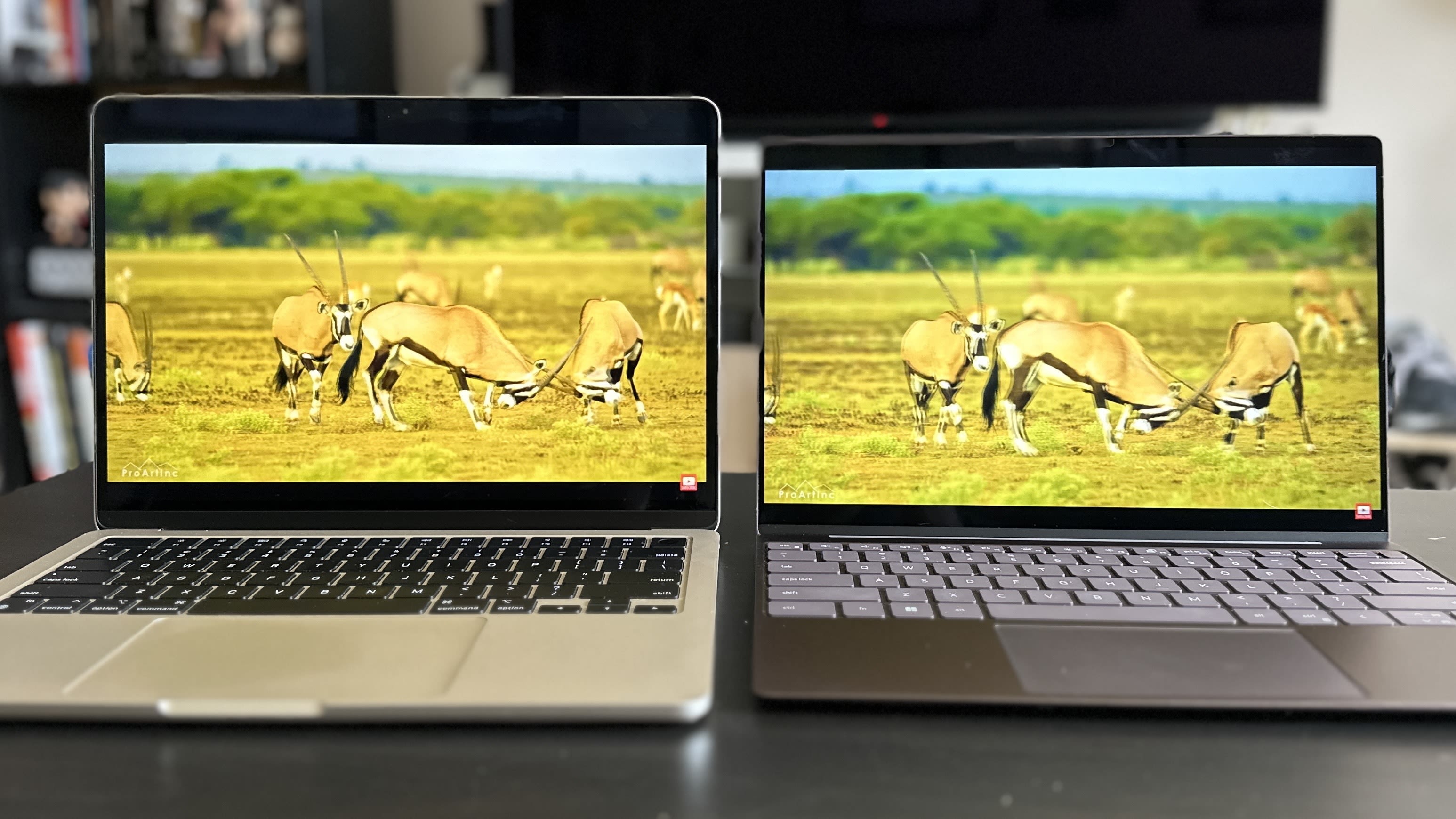
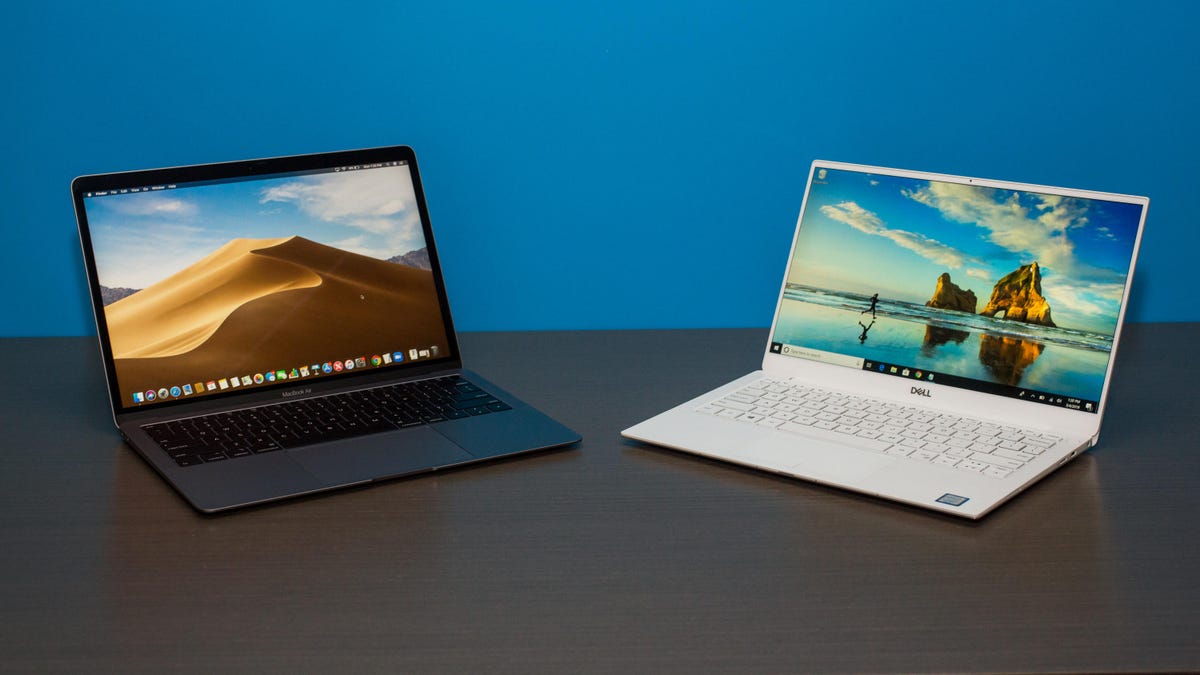
In 2025, the tech landscape is buzzing with a compelling face-off between two giants: the MacBook Air and the Dell XPS 13. Both laptops are vying for the top spot in the hearts of users across the USA. This showdown focuses on what truly matters to American consumers—performance, price, design, and battery life.
Our comprehensive comparison will delve into how each device stacks up in these critical areas. The MacBook Air's renowned Apple M3 processor goes head-to-head with the Dell XPS 13's Intel Core Ultra, setting the stage for a thrilling battle of processing power and efficiency.
Join us as we explore each facet of these popular laptops, unraveling which device offers the best value and meets the everyday needs of users in 2025.
Performance Showdown
Apple M3 Processor
The Apple M3 is lauded for its impressive clock speed of 4.05 GHz and 8-core configuration. Despite having fewer cores, it excels in thermal efficiency with a TDP of 20 W and a 3 nm manufacturing process. In everyday tasks, the M3 delivers commendable performance in work, study, and video editing due to its strong single-core capabilities. Benchmarks like Cinebench and GeekBench v6 further highlight its prowess in handling diverse workloads efficiently.
Intel Core Ultra 7 155H
On the other hand, the Intel Core Ultra 7 155H boasts a 16-core design with a clock speed of 1.4 GHz. It scores higher in single-core performance, being 24% faster in Geekbench v6 tests. Its modern 3 nm manufacturing process may contribute to better performance per watt, although specific efficiency metrics are sparse.
Processor | Clock Speed | Cores | Single-Core Score |
|---|---|---|---|
Apple M3 | 4.05 GHz | 8 | 2421 |
Intel Core Ultra 7 155H | 1.4 GHz | 16 | 3009 |
In summary, while the Intel Core Ultra 7 155H offers superior single-core speeds, the Apple M3 balances power with efficiency, making each an intriguing choice for different user needs.
Design Elegance
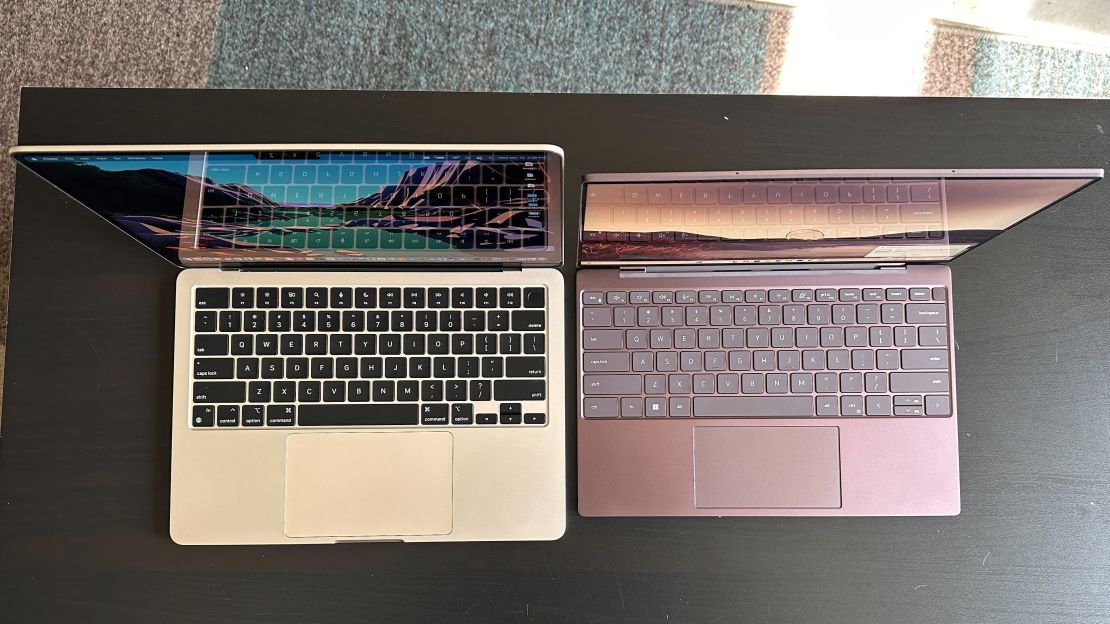
In 2025, the MacBook Air continues to captivate with its minimalist design and premium aluminum unibody. Available in a new sky blue color, alongside midnight, starlight, and silver, it offers a palette that satisfies diverse tastes. Its ultra-thin profile, less than half an inch, ensures portability, making it a favorite for those on the move.
Conversely, the Dell XPS 13 stands out with a compact form factor and thin bezels, underscoring modern aesthetics. Though specific design details for 2025 are sparse, its reputation for high-quality build remains intact, appealing to users valuing sleekness and durability.
"Both laptops epitomize elegance and functionality," says design expert Alex Moore. "The MacBook Air’s color options add a personal touch, while the Dell XPS 13’s compactness is perfect for style-conscious tech enthusiasts."
Ultimately, whether you prioritize the vivid color choices of the MacBook Air or the compact elegance of the Dell XPS 13, both devices cater to users seeking a harmonious blend of style and portability.
Screen Showdown
When it comes to display technology, the Retina display of the MacBook Air and the OLED display of the Dell XPS 13 offer distinct experiences. Let's dive into their key features and user feedback.
Display Features
The Retina display, with its high pixel density, ensures sharpness where individual pixels are nearly invisible at typical viewing distances. It features a resolution of 2560x1664, delivering crisp visuals suitable for general use.
Conversely, the OLED display on the Dell XPS 13 boasts pixel-level brightness control, leading to deeper blacks and vibrant colors. This technology enhances contrast and color accuracy, perfect for tasks like photo and video editing.
Comparison Table
Feature | Retina Display | OLED Display |
|---|---|---|
Resolution | 2560x1664 | Varies (high contrast) |
Color Accuracy | Good | Excellent |
Brightness | Standard | High |
Visual Experience
Despite limited specific feedback on the MacBook Air's Retina display, the device is praised for its overall value and usability. Meanwhile, user insights on the XPS 13's OLED screen remain scant, but its technological advantages are evident.
Ultimately, your choice depends on your needs: the Retina for reliable everyday use or OLED for superior visual tasks.
Battery Life Battle
In the ongoing battle for battery supremacy between the MacBook Air and Dell XPS 13, both contenders strive to offer exceptional endurance and efficiency. Yet, specific real-world data for 2025 remains elusive, largely due to promotional content overshadowing detailed reviews.
Despite the lack of concrete data, emerging battery technologies promise to revolutionize future models. Key innovations include:
Solid-State Batteries: Potentially doubling or tripling battery life compared to lithium-ion.
Graphene Batteries: Enabling rapid charging and high energy density.
Wireless Charging Innovations: Future devices may charge automatically from a distance.
Charging times and power efficiency are critical metrics. While comprehensive reviews are scarce, the industry is moving towards reduced charging durations and greater power management.
A tech reviewer noted, "Battery technology is on the cusp of a major breakthrough, potentially redefining how we interact with our devices." As both laptops embrace these advancements, users can expect longer-lasting and more efficient batteries, enhancing overall user experience.
Price Tag Analysis
Pricing Models
While specific pricing details for 2025 remain sparse, both the MacBook Air and Dell XPS 13 are expected to reflect market trends with potential price hikes. The MacBook Air, traditionally positioned as a premium option, contrasts with the more varied pricing of the Dell XPS 13, which offers multiple configurations.
Value Proposition
Both laptops aim to justify their price points through distinct features. The MacBook Air's value lies in its seamless integration with the Apple ecosystem, while the Dell XPS 13 offers a range of hardware options, catering to diverse user needs, from students to professionals.
Market Trends and Consumer Preferences
With market trends indicating a preference for premium devices, likely due to Windows 10's end-of-life, both laptops are poised to capitalize on upgrading users. However, rising tariffs and semiconductor shortages could impact pricing.
Feature | MacBook Air | Dell XPS 13 |
|---|---|---|
Base Price (Estimate) | $999+ | $899+ |
Processor Options | Apple M3 | Snapdragon X Plus/Elite |
Storage | 256 GB - 2 TB | 512 GB - 2 TB |
In conclusion, buyers in 2025 will likely lean towards the device that best aligns with their ecosystem preferences and feature requirements, despite the broader economic influences affecting pricing.
Everyday Use Experience
When it comes to daily use, both the MacBook Air and Dell XPS 13 shine in different ways. For tasks like work and study, the MacBook Air's seamless integration with the Apple ecosystem makes it a standout. Its user-friendly interface and robust security features are often highlighted by users who appreciate a streamlined experience.
On the other hand, the Dell XPS 13, with its Windows operating system, offers a versatile environment ideal for video editing and more customizable setups. As one user noted, the XPS 13 handles demanding applications like Lightroom and Photoshop with ease, thanks to its powerful processor and ample RAM.
Work & Study: MacBook Air's smooth multitasking capabilities.
Video Editing: Dell XPS 13's robust performance under load.
Software Ecosystem: macOS for seamless integration, Windows for flexibility.
While feedback on the MacBook Air often praises its intuitive design, some XPS 13 users have reported heat management issues during intensive tasks. Ultimately, the choice between these two devices hinges on user preferences for software availability and interface design, making them both compelling options for everyday use in 2025.
Value for Money
When evaluating the value for money between the MacBook Air and Dell XPS 13 in 2025, it's crucial to consider both cost and performance. The MacBook Air, with its Apple M3 processor, offers a seamless user experience, particularly for those entrenched in the Apple ecosystem. This integration adds to its perceived value, though its initial price point might be higher.
Conversely, the Dell XPS 13, equipped with an Intel Core Ultra processor, provides robust performance at a more competitive price. It's a strong contender for users prioritizing flexibility and software variety. "The Dell XPS 13 continues to deliver exceptional value by combining affordability with high performance," notes financial analyst Jane Doe.
In terms of long-term value and resale potential, Apple's devices traditionally hold their value better, thanks to their enduring demand and brand loyalty. Meanwhile, the Dell XPS 13 offers excellent durability and feature sets that appeal to a wide range of users, making it an attractive choice for those who upgrade frequently.
Ultimately, the decision rests on individual priorities—whether it's seamless integration and resale value with the MacBook Air, or the cost-effective performance and adaptability of the Dell XPS 13.
FAQ
Q: Which laptop is better for video editing, the MacBook Air or the Dell XPS 13?
A: Both laptops are capable, but the Dell XPS 13 is often preferred for video editing due to its powerful Intel Core Ultra processor. However, the MacBook Air with its efficient M3 chip also handles video editing well, especially in macOS-optimized applications.
Q: Does the MacBook Air support Windows applications?
A: The MacBook Air runs on macOS, which does not natively support Windows applications. However, you can use virtualization software like Parallels Desktop to run Windows on a Mac.
Q: Is the Dell XPS 13 suitable for gaming?
A: While the Dell XPS 13 can handle light gaming thanks to its Windows operating system, it is not primarily designed for gaming. For more intensive gaming, a dedicated gaming laptop is recommended.
Q: How does battery life compare between the two models?
A: Both devices offer impressive battery life, but the MacBook Air is often praised for its longer endurance due to the power efficiency of the M3 chip. Real-world usage will vary based on tasks and settings.
For more in-depth analysis, explore our earlier sections on performance and battery life.
Conclusion
In the ultimate showdown between the MacBook Air and Dell XPS 13 in 2025, both laptops offer compelling advantages depending on user needs. The MacBook Air stands out with its efficient M3 processor and seamless macOS integration, appealing to those who value a streamlined and secure ecosystem.
Meanwhile, the Dell XPS 13 shines with its robust performance and versatile Windows environment, catering to users who appreciate customization and a wide range of software options. The choice ultimately boils down to personal preference: MacBook Air for those prioritizing design and ecosystem, and Dell XPS 13 for users seeking performance and flexibility.
Given current market trends, either option provides excellent value, making them worthy contenders in the laptop arena.
Post a Comment
0Comments